Rank your automation ideas by boredom, not complexity
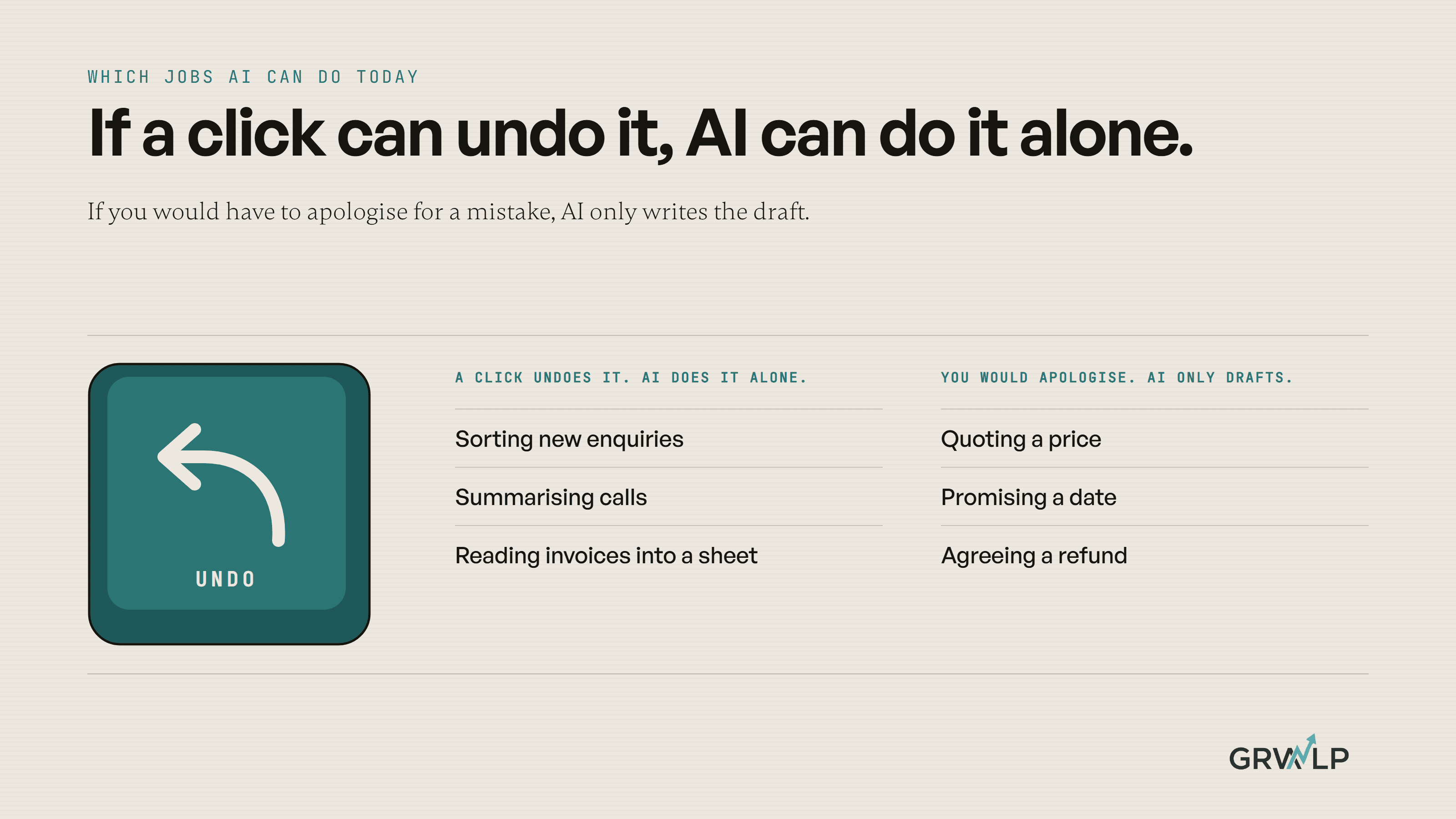
Rank your ideas by how dull they sound rather than how clever they would be to build, and start at the top. The impressive automations are built to be demonstrated. The boring ones are built to be used.
TL;DR
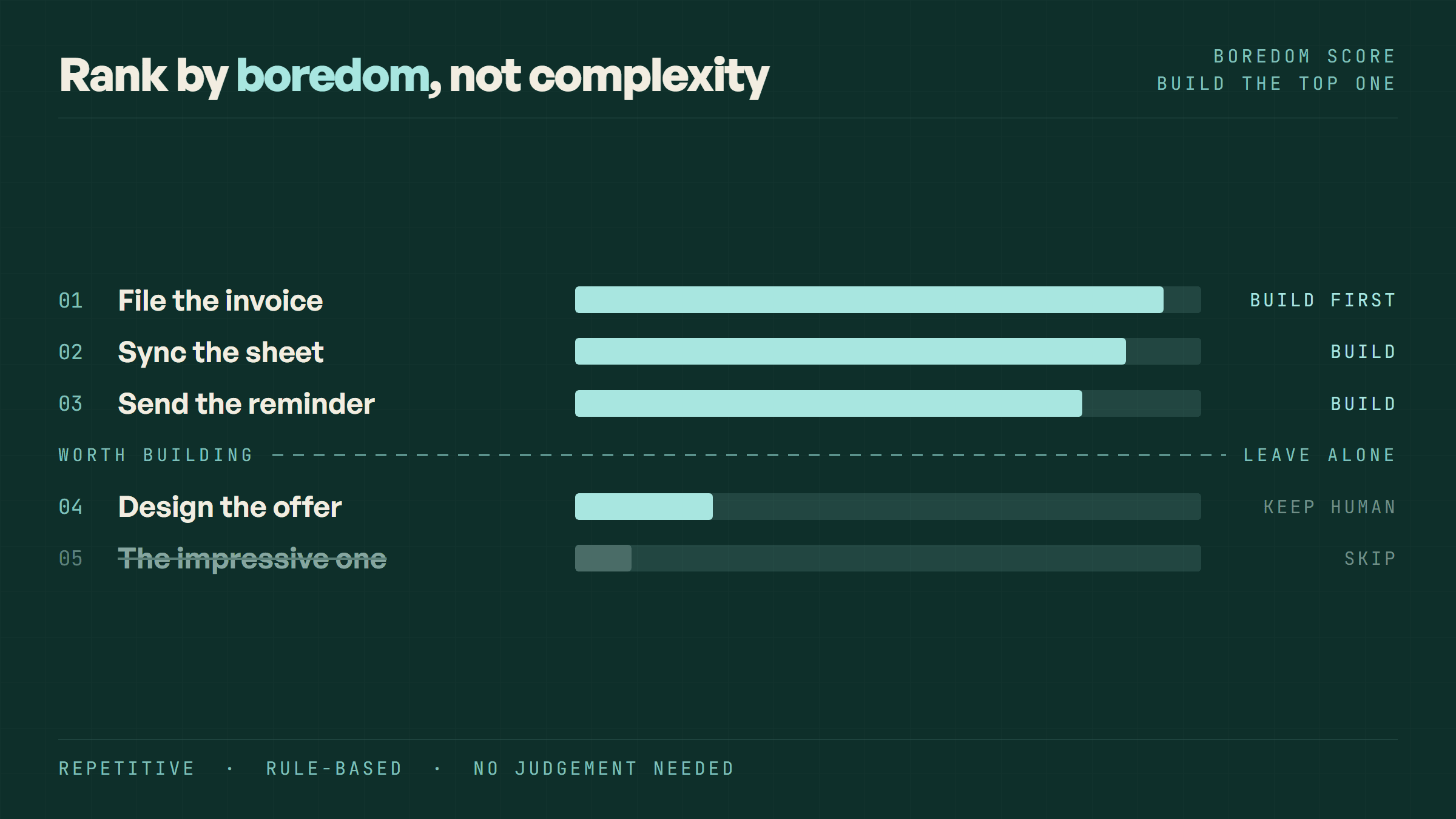
The automation worth building first is almost always the most boring one on your list. Rank your ideas by how dull they sound rather than by how clever they would be to build, and start at the top. Boring tasks are repetitive, rule-based and unglamorous, which is exactly what makes them safe to hand to a machine and valuable to get back.
The automation worth building first is almost always the most boring one on your list. Rank your ideas by how dull they sound rather than by how clever they would be to build, and start at the top. Boring tasks are repetitive, rule-based and unglamorous, which is exactly what makes them safe to hand to a machine and valuable to get back.
That is the whole method. The rest of this page is why it works, which four to start with, and the three to leave alone.
What is a boring automation?
A boring automation is one you would never record for a feed. No branching logic worth showing off, no clever trigger chain, nothing about it that photographs well.
It usually looks like this. The same file gets renamed and filed in the same place every week. A number gets copied out of one screen and typed into another. An email arrives and somebody re-types its contents into a system that could have received them directly. A reminder gets sent that nobody enjoys sending.
None of that is interesting. All of it is repetitive, rule-based, and happens whether or not anyone is having a good day. Those three properties are what make a task automatable at all.
Why do flashy automations fail so often?
Because they are built to be demonstrated, not used.
An automation that looks impressive tends to span many tools, handle many cases, and depend on several things staying exactly as they are. Each of those is a place it can break. A demo runs once, on prepared data, with the person who built it watching. Your Tuesday does none of those things.
Here is what that costs in practice. One owner on a no-code forum added their stack up: an automation tool, a database, a scheduling plugin, a payment integration, and a messaging plugin. About $800 a month. The system still broke every week. Another described spending more time debugging their workflows than running the business.
Neither of those people failed at automation. They bought automation that was designed to be sold.
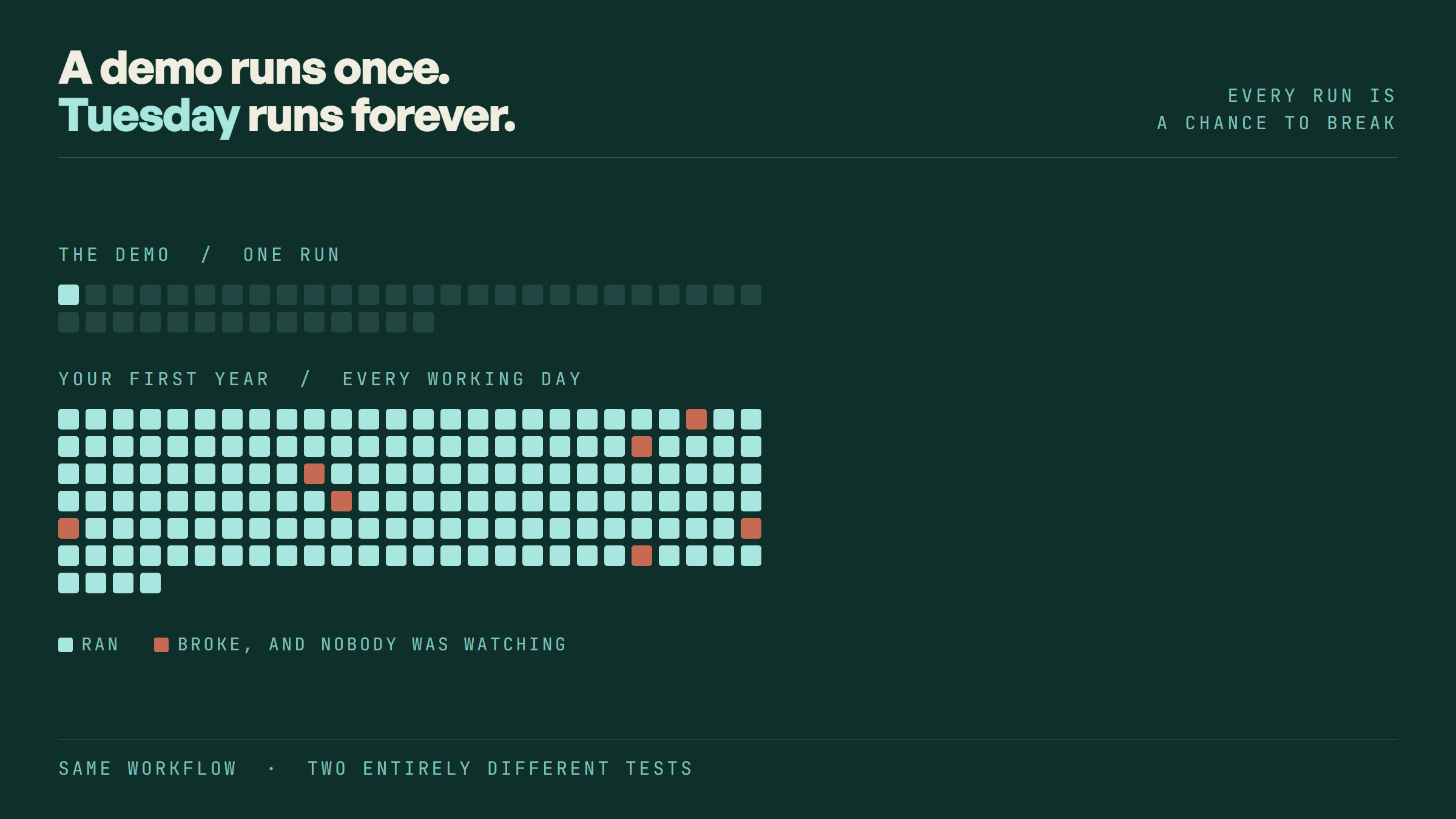
The question that would have caught it is not "can it do this?" Everything can do this in a demo. The question is: what breaks it, who finds out when it breaks, and what happens on the Tuesday nobody is watching.
How do you rank automation ideas by boredom?
Write down every task you wish happened by itself. Then score each one on four questions and add the scores up.
How often does it happen? Daily beats weekly. Weekly beats monthly. A task you do once a quarter will never repay the work of automating it.
How many decisions does it need? Zero is best. If the task needs judgement, taste, or knowing that this particular customer is having a hard month, it is not boring. It is skilled, and it should stay with a person.
How much does it cost when it gets skipped? Some tasks quietly go undone and nobody notices for a fortnight. Those are the expensive ones.
Would anybody put it in a video? If yes, deprioritise it. This sounds like a joke. It is the most useful question on the list, because "impressive" and "valuable" pull in opposite directions here.
The highest scorer is your first build. It will be dull. That is the signal, not a problem.
Which four boring automations should a small business build first?
These four recur in owner-operated businesses because they are frequent, rule-based, and quietly expensive when skipped.
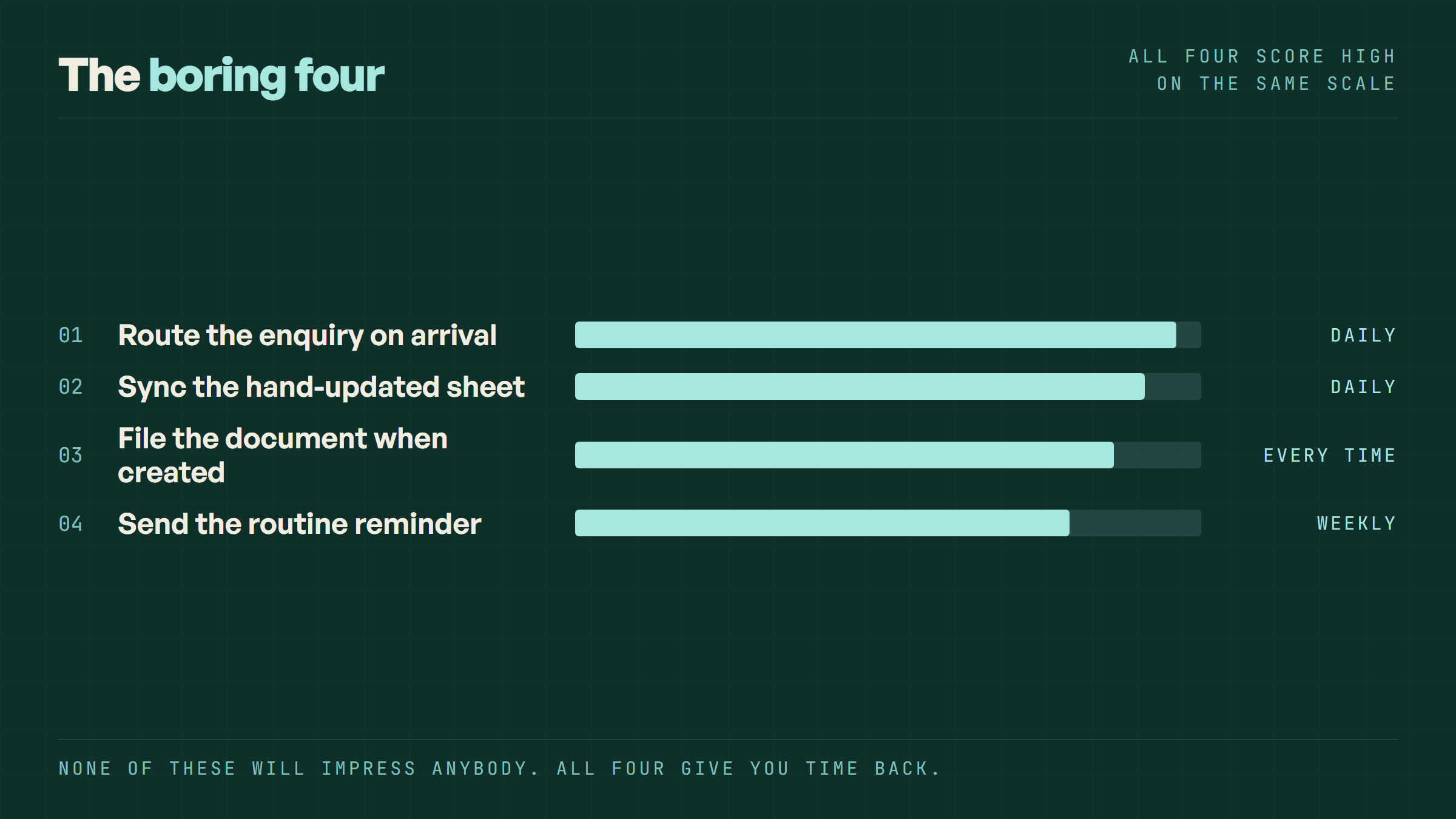
1. Route the enquiry the moment it arrives. Not into an inbox where it waits to be noticed, but into wherever you actually track work, assigned to somebody. Arriving and being noticed are two different events, and the gap between them is where leads die. 2. Sync the one spreadsheet everybody still updates by hand. Every small business has one. It is usually the source of truth for something important and it is usually wrong by Thursday. 3. File the document when it is created, not later. Invoices, receipts, signed agreements. Filing is the definition of rule-based work. 4. Send the routine reminder. The chase for the unpaid invoice, the nudge before the appointment, the follow-up nobody enjoys sending. It gets skipped precisely because it is uncomfortable, and skipping it costs money.
None of those will impress anybody. All four give you back time you are currently spending without noticing.
Which automations should you skip?
Three, and this is the part most people selling automation leave out.
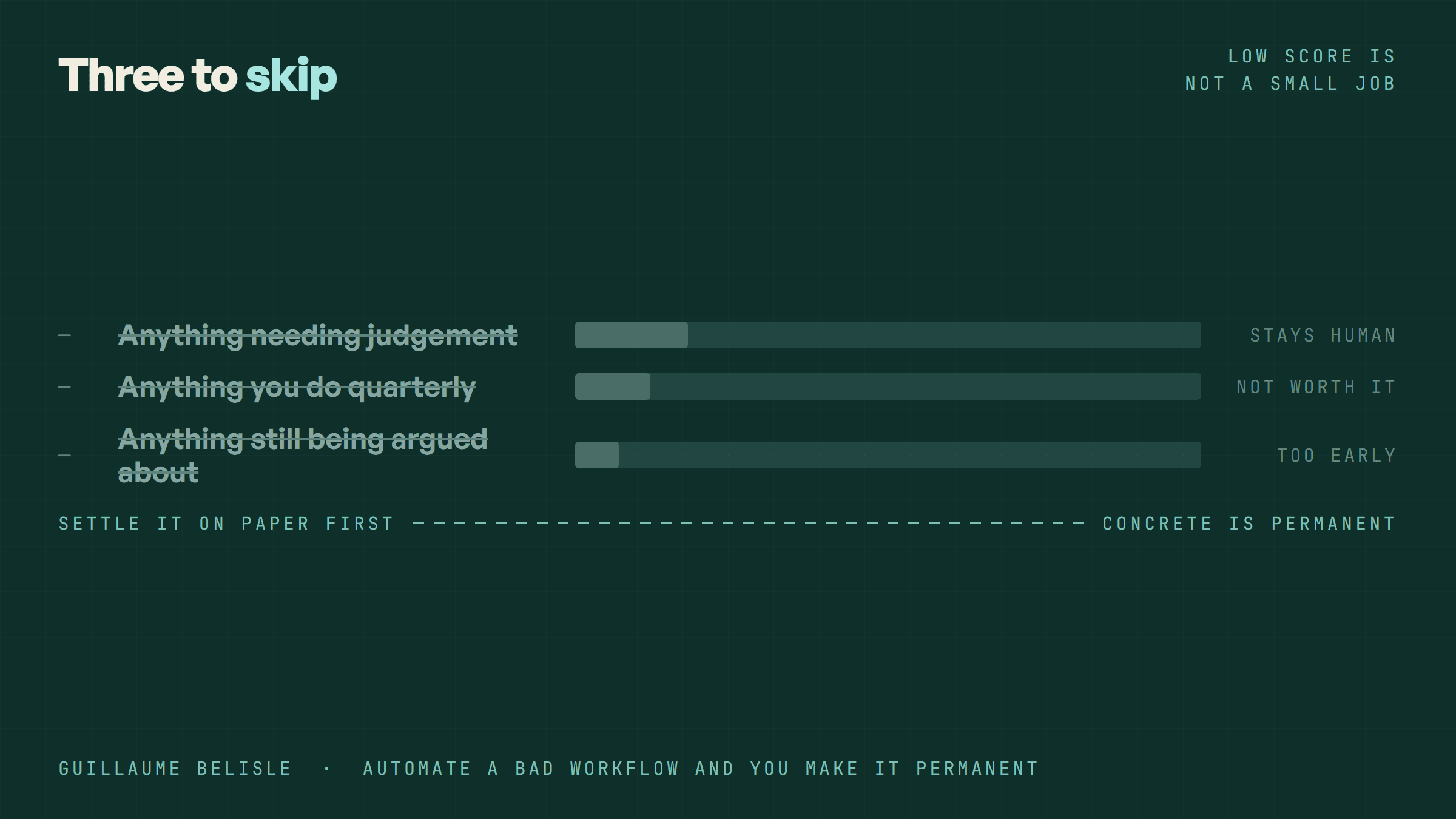
Skip anything that needs judgement. If a human has to weigh something up, automating it produces confident wrong answers faster than a person produces correct slow ones.
Skip anything you do rarely. A quarterly task automated is a system you will have forgotten how to fix by the time it breaks.
Skip anything whose process you are still arguing about. This is the big one. As Guillaume Belisle put it, the fastest way to make a bad workflow permanent is to automate it. Automating a process sets it in concrete. If the shape of the thing is still being debated internally, settle it on paper first. Changing your mind in a document is free. Changing your mind in a built system is not.
What does manual data work actually cost?
There is a number, and it needs a caveat attached to be worth quoting.
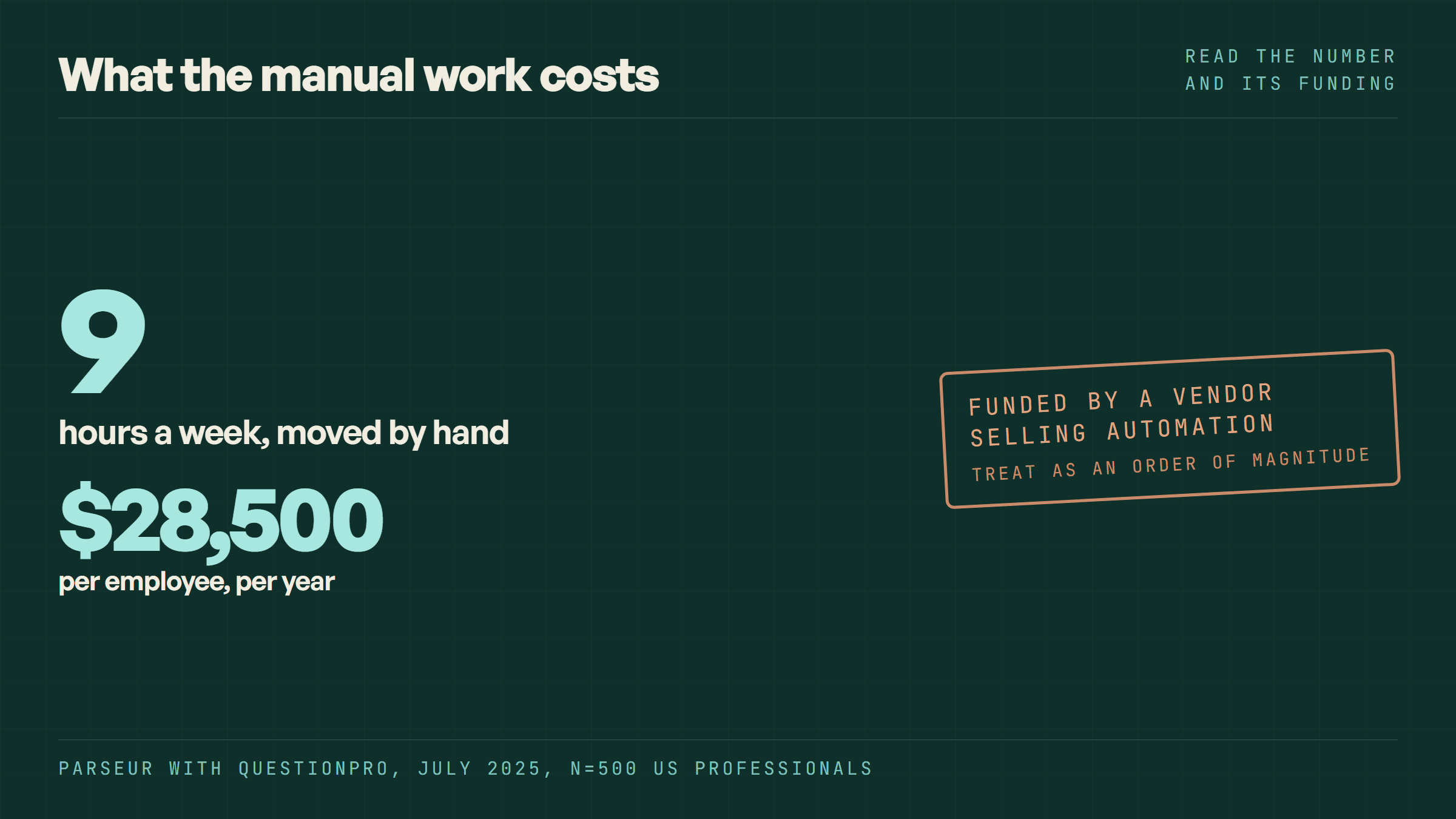
A July 2025 survey by Parseur with QuestionPro, of 500 US professionals across operations, finance, administration, IT and customer support, found respondents spent an average of more than nine hours a week transferring data by hand, and put the cost at $28,500 per employee per year.
The caveat: Parseur sells document-processing automation, so that survey was commissioned by a company with an interest in the answer being large. The methodology and sample are disclosed, which is more than most vendor research manages, and a separate wire release for the same study says "more than $28,000" where Parseur's own page says $28,500. Treat it as an order of magnitude, not a precise figure.
Even discounted heavily, the shape of the finding matches what owners describe without being prompted: the manual work is not one big cost, it is many small ones that never appear on an invoice.
When is automating the wrong move entirely?
When the process is broken. Automating a broken process gives you a faster broken process and removes your ability to notice.
When the volume is not there. If a task happens twice a month and takes ten minutes, you are looking at four hours a year. Almost nothing is worth building for four hours a year.
When the person doing it is the reason it works. Some tasks look mechanical and are actually held together by somebody's judgement. Automate those and you find out what that person was really doing, usually at the worst possible moment.
Do you need to hire somebody to do this?
Often no, and this is where we argue against our own interests.
If your list has one clear winner and it lives inside tools you already pay for, the automation built into those tools will probably do it. That is a weekend, not a project. Nobody needs to be hired for that.
Bring somebody in when the work crosses several systems that were never designed to talk, when getting it wrong has a cost you cannot absorb, or when you have already tried and the thing keeps breaking. That third one is not a failure on your part. It usually means the pieces were sold separately and nobody was responsible for the seams.
If you want to know which of those you are in, that is what a Growth Audit is for. You get the list, the ranking and a number, written down, whether or not you hire us afterwards.
So what do you do tonight?
Open a document. Write down every task you wish happened by itself. Then, next to each one, answer a single question honestly: would anybody ever put this in a video?
Start with the ones where the answer is no.
---
Written by Oyekola Obajuwon
Last updated